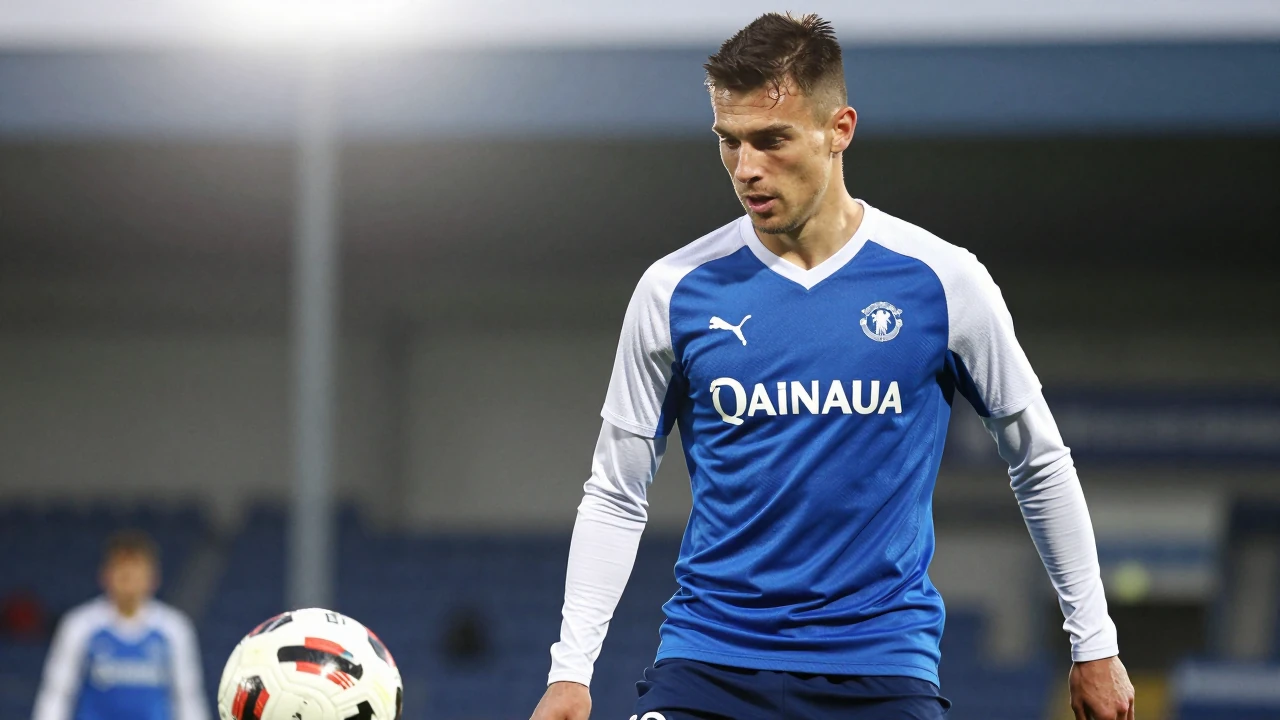

Tactical Tweaks for The Terrors: Enhancing Dundee United's Recent Form
As The Terrors navigate through the ups and downs of the league, it’s evident that recent performances have been a mixed bag of moments of brilliance overshadowed by lapses in concentration. Dundee United’s tactical setup has shown potential, but with some key adjustments, the team could significantly improve their results and performance on the pitch.
Current Formation and Strengths
Currently, Dundee United has been employing a 4-2-3-1 formation that aims to provide both defensive stability and attacking width. The double pivot in midfield has allowed the team to control the centre of the park during transitional phases, leveraging the energy of players like Calum Butcher and Ian Harkes. This combination has been effective in breaking up opposition play, but it has also led to a tendency to become too predictable in possession, especially against teams that press aggressively.
Areas for Improvement
Despite a solid midfield, Dundee United has struggled to convert possession into clear goal-scoring opportunities. The attacking trio behind the lone striker often find themselves isolated, leading to a lack of creativity and fluidity in the final third. This has been compounded by the reliance on individual brilliance rather than cohesive teamwork, which is vital for breaking down stubborn defenses.
##### Suggested Tweaks
1. Fluidity in Attack: One of the most effective tweaks would be to encourage fluid movement among the forwards. By allowing the wingers to interchange positions with the attacking midfielder, Dundee United could create confusion among opposition defenders. This would not only open up space for runs into the box but also enable the team to exploit gaps in the opponent’s defensive line.
2. Incorporating a Second Striker: If the situation allows, introducing a second striker could add depth to the attack. Deploying a 4-4-2 or a diamond formation would provide more attacking options and allow for greater pressure on opposing defences. This could be particularly useful in home games where The Terrors need to assert dominance.
3. Pressing High: Implementing a high press could turn the tide for Dundee United. By committing more players to the pressing game, they can regain possession higher up the pitch and create immediate goal-scoring opportunities. This requires a collective commitment from all players, especially the forwards, to ensure that they are quick to close down opposition players and win back the ball.
4. Set-Piece Optimization: Dundee United has had its fair share of set-piece opportunities, but the conversion rate has been lacking. Investing time into set-piece routines could yield dividends; considering the aerial prowess of players like Ryan Edwards and the creativity from set-piece takers, this could become a critical weapon in their arsenal.
5. Defensive Cohesion: While the team has shown resilience at times, there have been moments of disorganization in defence that have led to critical mistakes. To address this, a stronger emphasis on communication and organization is essential. This could involve a more structured approach to defend against counter-attacks, ensuring that the backline remains compact and that midfielders track back effectively.
Conclusion
As Dundee United continues to develop under pressure, the tactical adjustments suggested could provide the spark needed to elevate their performances. The potential is there, but to unlock it fully, The Terrors must be willing to adapt and innovate their approach on the pitch. With the right tweaks, Dundee United can transform their recent form into a consistent run of results that will keep them competitive in the league.